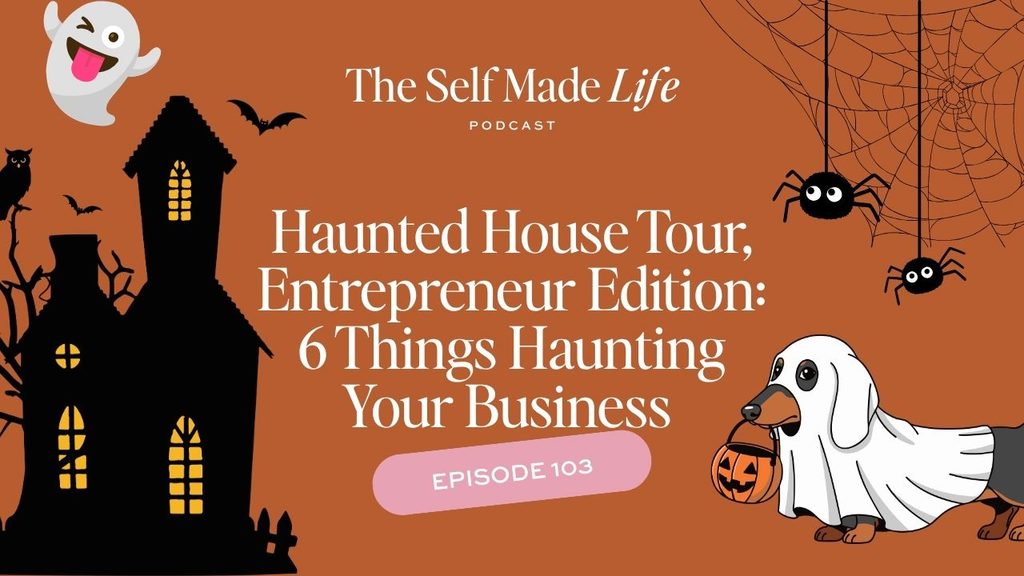
Haunted House Tour, Entrepreneur Edition: 6 Things Haunting Your Business
TL;DR: The scariest things in business aren’t ghosts. They’re an outdated brand you hide from on proposals, an inbox with too many open loops, unclear scope, the “little business” comment at family dinners, tax surprises, and a website that no longer matches who you are. Most of them come down to the same fix: clarity, systems, and the right support. On this Halloween episode of The Self Made Life Podcast, I share the real stories behind each one.
It’s almost Halloween, and I couldn’t let it pass without doing something fun.
A while back I posted a carousel on Instagram: a haunted house tour, entrepreneur edition. The response was unhinged in the best way. People tagged their business besties, saved it, shared it, and commented things like “this has happened to me.” So I turned it into a podcast episode, because some of these hauntings deserve the full story.
Grab a pumpkin spice whatever. Let’s go.
Haunting #1: Your Outdated Brand on Every Proposal
You’re attaching your portfolio to an email for a dream client. You catch a glimpse of your own logo, the one you made in Canva in 2017, or the one your cousin designed as a favour. And you feel that little ping.
Ooh. Yeah. That’s still there.
That ping isn’t vanity. It’s your gut telling you your brand isn’t telling the right story anymore. Every time you send a proposal on an outdated brand, it’s showing up to the meeting in sweatpants.
One client told me she used to screenshot her proposals and crop the logo off the top before sending them. She couldn’t stand attaching it. But hiding your brand doesn’t work either. You’re not showing up as you, and the proposal fades into the background.
I talk to women all the time who have built incredible businesses. Their pricing has gone up. Their clients have changed. But their brand is still living in the era when they were figuring things out. That creates real dissonance: you’re charging premium rates while your visual identity whispers “maybe she’s still a side hustle.”
Your brand should be ahead of where you are, or at least walking beside you. Not lagging three chapters behind.
Haunting #2: Your Inbox After a Weekend Off
You shut your laptop Friday feeling like a functioning, thriving human. Maybe you went outside or saw your kids. Or you ate a meal that wasn’t in front of a screen. Then Monday arrives and your inbox is… a lot.
A full inbox is a blessing. But when it feels like a monster every single Monday, it’s usually a systems problem in disguise. Too many open loops: clients with no clear place to send feedback, conversations happening over email and DMs instead of a project management tool, and everything feeling urgent because there’s no structure around what actually is.
I use Dubsado now (I’ve used HoneyBook in the past), and the biggest shift came from proper client onboarding: where to submit revisions, what my response windows are, and what’s happening when. As those systems grew, my inbox shrank.
If Mondays still feel haunted, ask yourself: what’s one process I can change to make Monday a little calmer?
Haunting #3: The Scope Creep Client
“This will only take a second.” “Can we just tweak this one thing?” “I know we said we were done, but…”
Scope creep is its own horror genre. But here’s what I’ve learned: it’s rarely malicious. It happens when a client isn’t clear on what’s included, what “final files” means, or when the project is actually done. They fill that gap with assumptions, and their assumptions and yours are not the same thing.
The antidote to scope creep isn’t being more rigid. It’s being more clear, up front and all the way through:
- A contract that spells out exactly what’s included
- A kickoff call or onboarding email that sets expectations from day one
- Reminders in every feedback round: “This is your second round. One more is included. Anything after that is billed separately.”
- A clear “this is done” moment
And pay attention to how each client takes in information. I once sent a Loom walkthrough on how to leave feedback in Pastel, and the client never watched it. They wanted that explained face to face. Some clients thrive asynchronously; others need a call. Tailoring the experience to them protects everyone.
Haunting #4: “How’s Your Little Business Going?”
The holidays are coming, and so is Uncle Bob.
Most people ask from genuine curiosity and love. But when you’ve poured your whole self into building something, hearing it called “little” stings.
You don’t have to justify your business to people who don’t have the context, you don’t owe anyone revenue numbers or a client roster. You get to know it for yourself, and you get to choose who you let in and celebrate with. This is exactly why I love having entrepreneur friends who get it.
Your business is not little. You’re growing it in the middle of real life, with kids, a mortgage, and hard seasons. That’s enormous.
Haunting #5: Wondering What You Owe in Taxes
I’m a brand and web designer, not an accountant, so please hire a professional. But I’ve been here, and it’s scary.
When I was freshly postpartum with my daughter, I had saved $30,000 for a short maternity leave. I ended up owing just over $30,000 in taxes. That was basically my maternity leave. My husband was between jobs, we had a toddler and a newborn, and nobody had set us up to know what we’d owe.
I fired that team and hired a new bookkeeper. This year, I got money back. The financial clarity has been a total game changer.
If you’re still chasing receipts and guessing at quarterly estimates, that’s a season, not a life sentence. Getting the right financial support in place is one of the most business-changing decisions you can make.
Haunting #6: Your Outdated Website Scaring Off Dream Clients
This is the one I feel most personally.
A woman has been running her business for three, five, seven years. Her clients love her. She gets referrals. But a cold lead lands on her website, maybe from a speaking gig, and what they see doesn’t match who she is anymore. The photos are five years old. The copy talks about services she doesn’t offer. The vibe is fine, but it isn’t her.
One client found out after the fact that a dream client had visited her site, gotten confused about what she did, and booked someone else. Not because her work wasn’t good, but because the proof wasn’t there. That’s money left on the table.
Your website should be your hardest working employee: 24/7, 365 days a year. It should book aligned clients while you’re sleeping, with your kids, or off for the weekend.
I know this because I was the shoemaker with no shoes, the web designer with an outdated website. I hired Laura for professional copy, had new photos taken, refreshed my own branding, and rebuilt my site. It has compounded significantly. That’s what a brand and website investment does when it’s done right: it closes the gap between who you are and what the world sees when they Google you.
What Does Self Made Mean to You?
Maybe this season, self made means facing the logo you’ve been hiding from. Maybe it means building the system that calms your inbox. Or maybe it means admitting your business was never little to begin with.
Whatever it is, I’d love to hear it. DM me on Instagram at @monarchdesignco.
Ready to Retire Your Outdated Brand?
If any of these hauntings hit close to home, especially the last one, it might be time to close the gap between the business you’ve built and the brand that represents it. I take on a limited number of branding and website projects each year, and the end of the year is a smart time to make the move.
Book a discovery call and fill me in on the details. Or slide into my DMs at @monarchdesignco. They’re always open.
🎧 Listen to the full episode on Spotify or Apple Podcasts.
FAQ
How do I know if I have an outdated brand? If you hesitate before sending a proposal, crop your logo out of documents, or feel like your visuals don’t match your current pricing and clients, your brand has likely fallen behind your business.
What causes scope creep with clients? Scope creep usually comes from unclear expectations, not difficult clients. Spelling out deliverables, revision rounds, and a clear “done” moment in your contract, onboarding, and every feedback round prevents most of it.
How do I stop dreading my inbox on Mondays? Close open loops with systems: a project management tool, a clear place for client feedback, and stated response windows. Fewer conversations scattered across email and DMs means a calmer Monday.
When should I update my website? When your photos, copy, or listed services no longer match what you offer or who you serve, or when leads seem confused about what you do. Your website should reflect the business you run today.