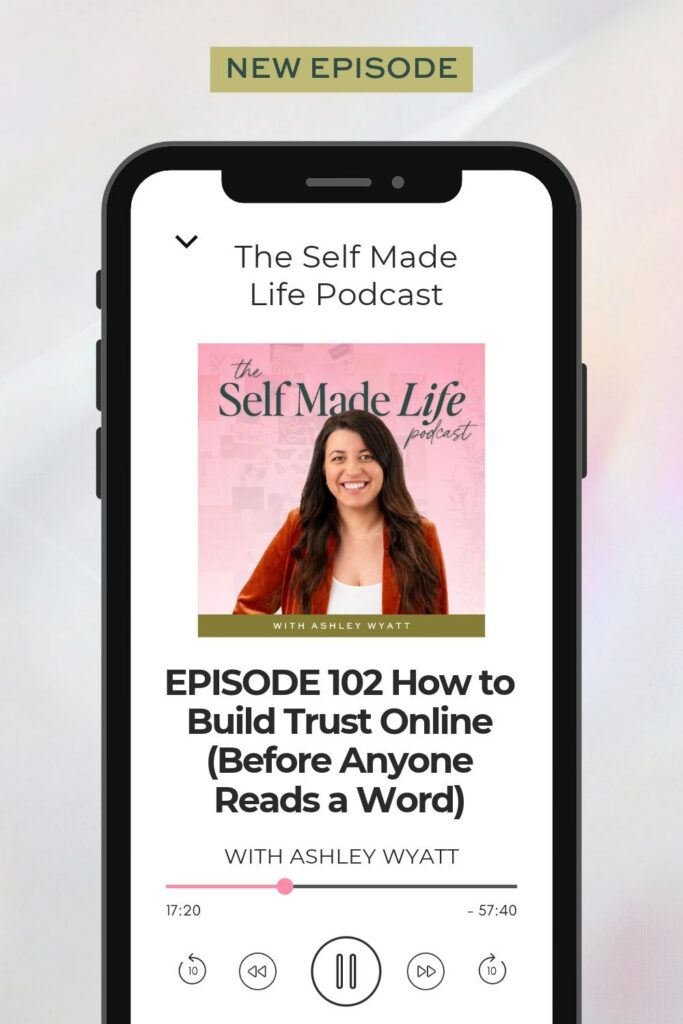
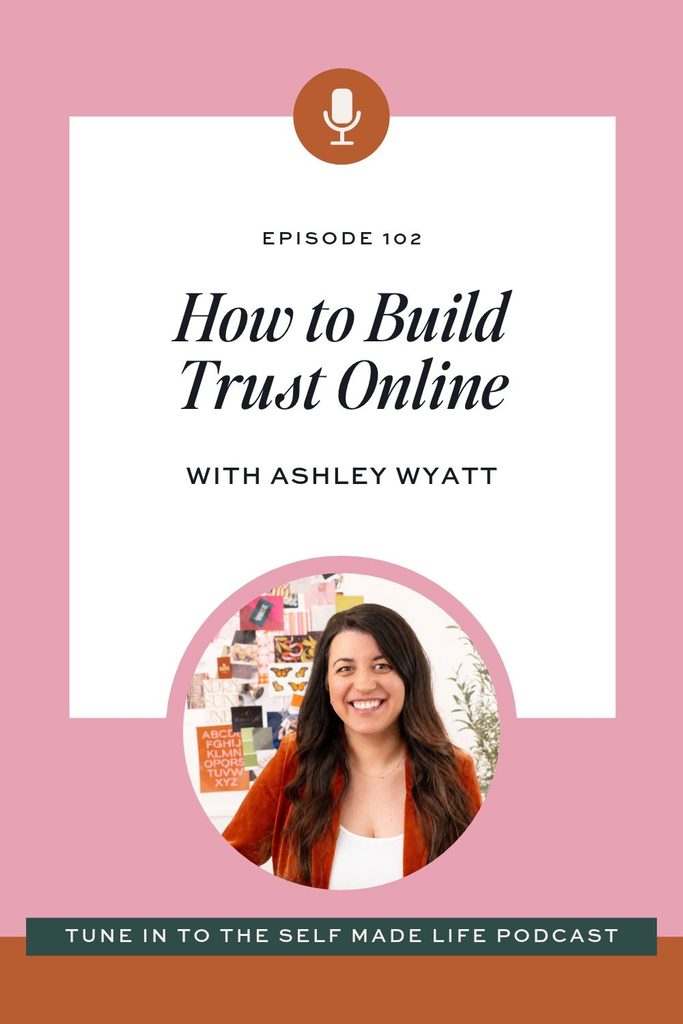
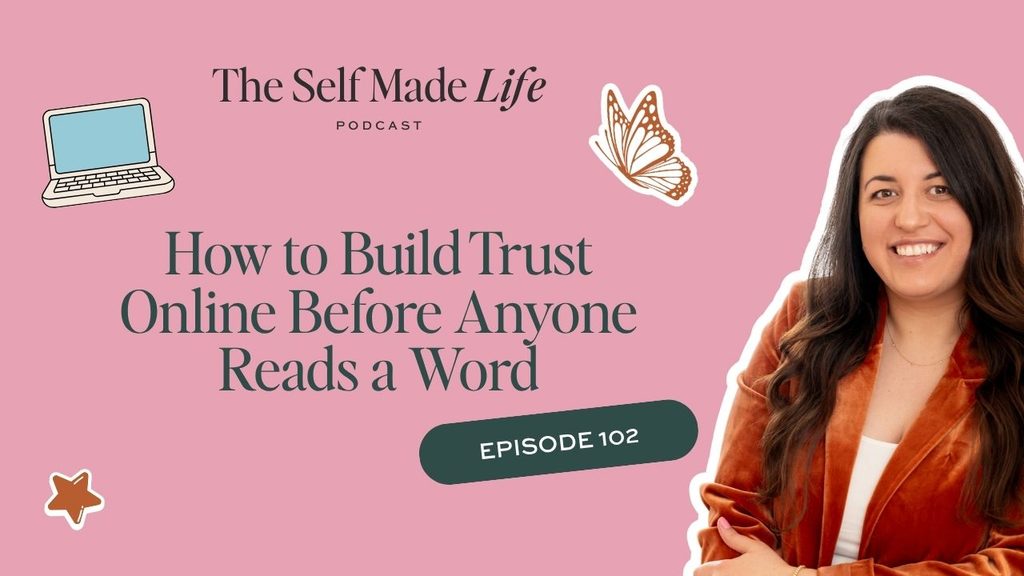
How to Build Trust Online Before Anyone Reads a Word
TL;DR: People decide whether to trust a business online in under 10 seconds, usually before they’ve read anything. Trust doesn’t come from follower count, a perfect feed, or a long list of credentials. It comes from three signals: visual consistency across every platform, messaging that sounds like a real person, and authenticity over perfection. To build trust online this week, audit your brand across platforms, read your last five captions out loud, and post one real moment.
Picture this. Someone lands on your Instagram or your website. They haven’t read a word. They scroll past two or three images, and they’ve already made up their mind about whether they trust you.
That whole decision takes less than 10 seconds. And it’s not random. It’s buyer psychology.
I think about this constantly, as a brand designer and as a consumer. So let’s talk about how to build trust online, and why it’s probably not what you’ve been told.
What most people think builds trust online
Ask most business owners and they’ll say trust comes from:
- A big following
- A perfectly curated feed
- A really impressive logo
- A long list of credentials and years in business on the About page
None of those will hurt you. But none of them are what makes someone trust you.
I’ve seen businesses with thousands of followers that felt completely hollow the second you landed on their page, and their sales reflected it. I’ve also seen businesses with a few hundred followers where you immediately thought, okay, I need to work with this person.
The difference had nothing to do with size or years in business. It came down to three things.
1. Visual consistency: the first signal people read
When your brand looks and feels the same everywhere (Instagram, website, business cards, print collateral, email signature, even your Canva templates), people’s brains read it as reliable. Stable. Trustworthy.
When it doesn’t match, something feels off. Your Instagram is fun and warm, your website feels cold and corporate, your logo gives a third vibe, and your photography is something else entirely. People can’t always name the problem. They just feel it. And when something feels off, trust doesn’t stick.
This was one of the biggest things I focused on in my own brand refresh. I wanted every touchpoint to feel like the same person and the same business: the same warmth, the same aesthetic, the same energy.
The difference since then has been wild. People slide into my DMs or hop on discovery calls already feeling like they know me. They’re halfway to yes before we’ve even talked.
That’s what consistency does over time. It builds familiarity, and familiarity builds trust.
2. Messaging that actually sounds like you
This is where a lot of businesses lose people without realizing it.
When your words are too polished, too corporate, or too fluffy, they could have been written by anyone. People feel that, and they scroll past. Because we don’t trust brands. We trust people.
When your captions, website copy, and emails sound like you (your humour, your warmth, your directness, the way you’d say it to a friend over coffee), that’s when people stop scrolling. They screenshot it and send it to their business bestie. They save it and come back to it.
And sometimes they say your exact words back to you on a discovery call. I’ve had that happen more times than I can count. They read the thing. The thing landed.
So ask yourself: does my messaging sound like me? Or does it sound like what a “professional business owner” is supposed to sound like? Or worse, like AI slop?
The version of you that shows up in a voice note to your best friend is the version people trust.
3. Authenticity over perfection
Think about the behind-the-scenes moment. The post you almost didn’t share because it felt too vulnerable or too honest. That’s what people connect with most, and it builds trust faster than any perfectly branded photo.
I’ve written posts that took me 20 minutes and got crickets. And I’ve posted things on a whim that felt like oversharing, and those were the ones that had people flooding my DMs with this is exactly me, how did you know?
Perfection creates distance. Authenticity creates connection. And connection is what trust is built on.
What this looks like in real life
Since refreshing my brand and showing up more consistently (content that sounds like me, visuals that feel cohesive everywhere, and real in-between moments), something shifted.
People started coming to me already warm. On discovery calls I’d hear, “I feel like I already know you from your Instagram.” Others told me they’d been following for a while and just knew they wanted to work with me. I had no idea I’d been planting those seeds all along.
That’s not luck, and I don’t have a massive following. It’s intentional, consistent, authentic branding building trust over time.
It shrinks the timeline from stranger to trusted expert. By the time someone books a call, they’re not trying to figure out whether they trust you. They already do. And that changes how you sell, how you show up, and how your business grows.
How to build trust online this week: 3 action steps
1. Audit your brand across every platform. Instagram, website, Facebook, email signature, email marketing, business cards. Does it all look like the same person and the same business? If not, that’s your starting point.
2. Read your last five captions out loud. Do they sound like you talking to a friend, with your words and your personality? Or like a version of you trying really hard to sound professional? You’ll know right away.
3. Post one thing this week that feels slightly vulnerable. Not your whole personal life. A real moment, a genuine opinion, or something behind the scenes that isn’t working perfectly. The post that makes you think I should really share this. Share that one.
Trust is built in small, consistent, real moments. Not the perfectly curated ones.
Frequently asked questions
How long does it take people to decide if they trust a brand online? Usually seconds. Most people form an impression from visuals alone (your feed, your homepage, your photography) before reading any copy, which is why visual consistency carries so much weight.
Do I need a big following to build trust online? No. Follower count doesn’t create trust. Plenty of small accounts convert better than big ones because their brand feels consistent, sounds human, and shows real moments.
What’s the fastest way to make my brand feel more trustworthy? Start with consistency. Make sure your website, Instagram, email, and print materials share the same look, voice, and energy. Then rewrite your copy so it sounds like how you talk.
Do I need a full rebrand to fix this? Not always. Sometimes the gap between your platforms is smaller than you think, and a fresh set of eyes can spot what’s disconnected. A full rebrand makes sense when your current brand no longer reflects the business you’ve grown into.
Ready for people to land on your page and feel like they already know you?
If you’re reading this thinking my brand isn’t doing this for me right now, it’s completely fixable, and it doesn’t always mean burning everything down. Sometimes it’s about looking at what you already have with a fresh set of eyes and finding the disconnect.
This is my favourite conversation to have. Book a free discovery call and let’s talk about where you are, where you want to go, and how to close the gap. Or explore our brand and website services to see how we work.
And come say hi on Instagram @monarchdesignco, where I’m practising what I preach (real moments included).