


Content Strategy for Small Business Owners: How to Post Less and Convert More with Rebecca Stanisic
TLDR;
Content burnout is real — and it usually comes from posting without purpose, not from posting too little. In this episode, content strategist Rebecca Stanisic (blogger since 2009, mom of teens, and the person behind @bitofmomsense) breaks down why a goal-first, long-form content strategy is the antidote to overwhelm for small business owners. Key takeaways: stop comparing yourself to influencers, use anchor content like blogs and podcasts to do the heavy lifting, and plan in quarterly, monthly, and weekly snapshots so you always know what comes next.
Content Strategy for Small Business Owners: Stop Posting Just to Post
A solid content strategy for small business owners doesn’t mean posting more — it means posting with a reason. And yet, most entrepreneurs are stuck in a cycle of creating just to keep up, burning out, going quiet, feeling guilty, and starting over again.
Sound familiar?
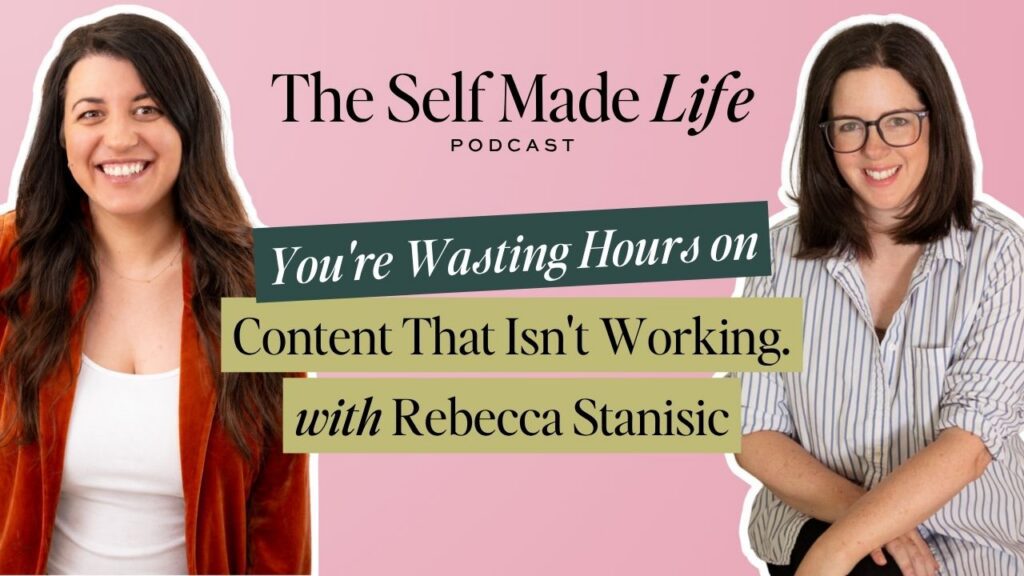
In this episode of the Self Made Life Podcast, I sat down with Rebecca Stanisic — writer, speaker, and content strategist who’s been helping entrepreneurs tell real stories online since 2009 — to talk about what it actually looks like to build a content plan that fits your life, supports your goals, and doesn’t require you to be on Instagram 24/7.
Here’s what came out of that conversation.
Why Most Small Business Owners Feel Overwhelmed by Content
Rebecca’s been watching the content space evolve for over 15 years. And what she keeps seeing — across every algorithm shift, every new platform, every AI tool — is the same pattern: entrepreneurs who are creating more content than they need to, with less clarity than they want, and burning out faster than they expected.
The root cause? Comparison.
When you scroll Instagram and see what everyone else in your industry is doing, it’s almost impossible not to feel like you’re behind. But here’s the problem — a lot of what you’re comparing yourself to is influencer-level output from people whose full-time job is creating content. That’s their product. For you, content is how you market the actual thing you do.
That’s a completely different bar. And measuring yourself against it is going to drain you every time.
Rebecca’s advice: compare yourself to your own month-to-month progress, not to someone else’s highlight reel.
What a Real Content Strategy Actually Looks Like
The word “strategy” can make it sound like there’s a rigid, prescribed system you have to follow perfectly. Rebecca reframes it completely.
Strategy, for her, is fluid. It starts with your goals — what do you need people to know? What do you want them to do? Where are you headed in the next 30, 60, 90 days? — and then works backwards from there.
Tools and platforms are tactics. Instagram, LinkedIn, email newsletters — these are all vehicles. They change constantly, and your strategy shouldn’t be built around any single one of them. Build your strategy around your goals and your message. Then choose the tools that support that.
Once you have clarity on your goals and messaging, making content gets significantly easier. Instead of “I have to post something,” you’re thinking: “I need my audience to know X before I launch Y.” That reframe alone changes the whole experience.
The Case for Long-Form Content (And Why It’s Underused)
If you’ve been sleeping on blogs and podcasts because they feel like too much work, this section is for you.
Rebecca calls blogs and podcasts “anchor content” — and the name says it all. These are pieces that:
- Live on search engines and keep bringing in traffic long after you publish
- Build trust and establish authority in a way that a 30-second Reel just can’t
- Become the source material for every other piece of content you create
One blog post or podcast episode can be repurposed into Instagram posts, newsletter content, LinkedIn posts, Pinterest pins, and talking-head Reels. You create it once. It keeps working.
Content strategy for small business owners gets a lot more manageable when you have anchor pieces pulling their weight. Instead of starting from zero every week, you always have something to come back to — something you can slice, repurpose, and redistribute without the pressure of creating something brand new.
And if you’ve been wanting to pitch yourself to media or guest on other podcasts? Long-form content gives you a portfolio of your thinking. It shows the depth of your expertise in a way that a feed full of graphics doesn’t.
The Biggest Content Mistakes Rebecca Sees (And How to Fix Them)
1. Comparing yourself to influencers They’re paid to be on the apps all day. You’re not. Stop measuring your output against theirs.
2. Overthinking before you post Waiting for the perfect caption, the perfect image, the perfect time — it keeps you stuck. Get clear on your message and ship it.
3. Ignoring your data Reach is not the metric. DMs, website traffic, most-visited pages, content that leads to conversions — that’s the data that tells you what’s actually working. Rebecca’s personal measure of success on Instagram? Conversations in her DMs. Not likes.
4. Creating too much new content This one surprises people, but Rebecca is direct about it: most small business owners create more than they need to, and they don’t reuse enough. You don’t have to reinvent the wheel every week. Your best-performing content from two years ago? Most of your audience never saw it the first time. And even if they did — they probably need the reminder.
The 3-1-1 Planning Method
This is Rebecca’s practical framework for planning content without the overwhelm.
Quarterly (3 months out): What are the bigger goals on the horizon? What seeds need to be planted now?
Monthly: What’s happening this month that your content should support?
Weekly: What’s the specific content going out this week, and does it connect to the month and quarter above?
When you sit down to plan, you’re not staring at a blank page. You’re filling in a structure you already have. And that alone cuts a huge amount of decision fatigue.
What to Do When You Just Can’t Keep Up
Rebecca is a caregiver. She’s a mom of older teens. She’s been doing this long enough to know that there are seasons when showing up consistently online is just not possible — and she’s made peace with that.
Her approach when she hits that wall: if she can’t post, she’s still in Stories. She’s still in DMs. She’s still making that one-on-one human connection. Because that, she says, is what grounds her when everything else feels like too much.
The expectations she’s set around her own content aren’t high-pressure. The way she shows up online is a reflection of how she wants her clients to feel working with her: calm, intentional, sustainable.
That’s a good bar to hold yourself to.
One Step You Can Take Today
If you take nothing else from this episode, Rebecca’s recommendation is simple: answer three questions.
- What do I need my audience to know in the next week?
- What do I need them to know in the next month?
- What do I need them to know in the next three months?
Those answers are your next three pieces of content. Start there.
FAQS
What is a content strategy for small business owners?
A content strategy for small business owners is a goal-driven plan that outlines what you’ll create, where you’ll share it, and how it connects back to your business objectives. Unlike posting on a whim, a strategy starts with your goals and works backwards to determine your messaging, content types, and publishing cadence.
Why do small business owners feel overwhelmed by content?
Most content overwhelm comes from creating without direction. When you don’t have a clear goal behind what you’re posting, every piece of content feels like starting from scratch. Comparison to influencers and the pressure to constantly create something new also contributes to burnout.
What is long-form content and why does it matter?
Long-form content includes blog posts, podcasts, and newsletters — pieces that live beyond the social feed and continue working for you over time through search. These become anchor pieces you can repurpose into social posts, emails, and more, which means you’re getting far more mileage out of one piece of content.
How often should a small business owner post on social media?
Less than you think. A small business owner is better served by posting with intention than by hitting a arbitrary number. Quality, clarity, and consistency matter more than volume — and repurposing existing content is often more effective than creating something new every day.
What should a small business content plan include?
A solid content plan includes your business goals, your core messaging, a mix of content types (long-form anchor content plus social), and a simple planning structure. Content strategist Rebecca Stanisic recommends a 3-1-1 approach: plan at the quarterly, monthly, and weekly level so you always know what’s coming and why.
Connect with Rebecca Stanisic
Rebecca works with entrepreneurs on content strategy that’s honest, intentional, and built for real life — not just the good weeks.
- Website: rebeccastanisic.com
- Instagram: @bitofmomsense
- Free 20-minute content call: Book at rebeccastanisic.com
Ready to stop posting just to post? Share this episode with a business owner who needs the permission slip to slow down and get intentional.
And if your brand and website don’t reflect where your business is actually headed, that’s the work we do at Monarch Design Co. → themonarchdesign.co


