


Professional Organizer Rebrand Results: How Shannon Went From Canva Logo to $25K Project
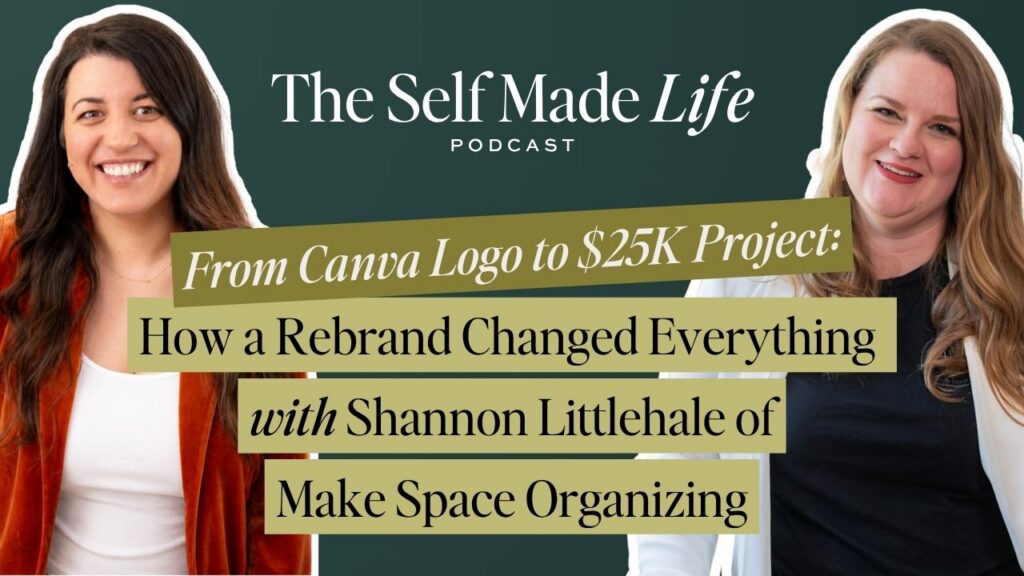
When Shannon Littlehale almost walked away from her business in 2023, she wasn’t burned out from too much success. She was burned out from too much effort with not enough return. She was good at what she did — genuinely excellent at it — but her brand wasn’t saying that. And she knew it.
What happened after she invested in a rebrand is one of those professional organizer rebrand results stories that sounds almost too good to be true. But it’s real, and it’s worth telling — because the numbers are only part of it.
Shannon’s Business Before the Rebrand
Shannon founded MakeSpace Organizing in Long Branch, New Jersey in 2021. The timing wasn’t planned so much as it was nudged into existence by COVID, a nudge from her husband, and a dream she’d been carrying with her since college. She had real skills, a growing referral base, and clients who loved working with her.
She also had a Canva logo she couldn’t explain, a print ad in a local magazine she cringed at every time it ran, and a brand presence she described plainly: amateur hour.
“I wanted someone to look at it and think, ‘My gosh, this is amazing.’ What I had was communicating, ‘She’s probably fine.'”
By August 2023, she was sitting across from her therapist saying she didn’t know if she wanted to quit or go all in. She went to a national professional organizing conference that fall to make her decision — and came back ready to invest.
That investment included working with a business coach who connected her with me for a rebrand.
After the Rebrand
This is where professional organizer rebrand results usually get reduced to a before-and-after photo. But Shannon’s experience was more layered than that.
She started showing up.
Before the rebrand, Shannon wasn’t pursuing bigger opportunities — not because they weren’t available, but because nothing in her brand made her feel ready to walk into them. The day her new branding launched, she was also showing up as a vendor at a conference. She had a tablecloth with her logo, cohesive printed materials, a polished table setup. Two other organizing companies were in the same venue.
“I felt like my presentation was next level. Because I had this branding, it made everything legitimate.”
The following year at the same conference, a networking group she joined told her that having her come in made them feel more legitimate. That kind of ripple effect doesn’t show up in ROI calculations — but it matters.
She sent the proposal she would have talked herself out of.
A few weeks after her brand launched, an interior designer she knew connected Shannon with a client who wanted their garage, pantry, outdoor kitchen, and additional spaces all done. Big scope. Big price tag.
Shannon had never met the client. She walked the property with the designer, ran the numbers, and knew what the right answer was: a $25,000 project. Her first instinct was to second-guess it.
“I was saying no before I even met them. I’m like, do they understand this is going to be a lot of money?”
The designer told her: these are clients who won’t push back as long as you can explain why. So Shannon sent the proposal. She was in her garden when the client called. A few questions. An “okay, this sounds great.” And then the HoneyBook payment notification before she even walked inside.
“I felt like I could be the pro that I felt like I could be. They were like, okay, yeah, we trust you.”
That $25,000 project represented a 614% return on her rebrand investment. And it led to more work with the same client, including a full closet project on a follow-up visit.
The Connection Shannon Almost Missed
Here’s what’s interesting: Shannon didn’t immediately connect the rebrand to the $25K project. She was in it, doing the work, moving forward. It wasn’t until she sat down to write about it later that the through-line became obvious.
“I don’t think I would have had the confidence to send a $25,000 proposal to somebody and feel like — this is the right choice — had I not been showing up with my new brand.”
Why Confidence Is the Real ROI
That’s the piece that gets lost when people think about professional organizer rebrand results as purely visual. The rebrand didn’t just change how Shannon looked. It changed how she showed up. And how she showed up changed what she was willing to ask for.
A polished brand told the client: this person knows what she’s doing. But more importantly, it told Shannon the same thing.
What Came Next: The Slow Season That Wasn’t Wasted
Q1 of this year was slower on the client side. Shannon’s team worked three days. A lot of business owners would spiral at that — and she admits she felt it too.
But instead of waiting it out, she got strategic.
She worked with an operations strategist to figure out her next hire — not just a job description, but how that person and her systems would need to work together. She also worked with a messaging strategist, Sierra Siegel, to build out a brand guide that finally gave her the words to match the visuals.
“I had this beautiful brand presence and I felt like visually I was showing up the way I wanted to, but the words didn’t quite match.”
The brand guide she came out of that process with has changed how she hands things off to her team. It’s simplified how she shows up online. She now has the confidence to bring on more support.
She also kept doing the things that felt thankless: email newsletters, blogging, consistent content. Not because she saw immediate results, but because she knew what it was building.
“I’m getting more leads from Google. I’ve had lot of leads from ChatGPT. Somebody is reading my blog — it’s just not a human.”
Perfectionism, Anxiety, and the Executive Dysfunction Nobody Talks About
Shannon went looking for an ADHD diagnosis last year because she couldn’t figure out why she knew what to do and still couldn’t make herself do it. What she found instead: she’s a high-functioning perfectionist with anxiety, and together those two things create the same executive dysfunction she’d been trying to outrun.
“If I can’t do it all the way, I don’t even want to try.”
The work hasn’t been in eliminating that tendency — it’s been in naming it when it shows up and pressing through it anyway. She’s built a circle of people who know her well enough to call it out when worst-case thinking starts driving decisions.
For her, that’s looked like sending the newsletter into the void anyway. Writing the blog post even when it feels like no one is reading. Keeping the systems going during the slow seasons so the pipeline doesn’t dry up when things get busy again.
What’s Next: Small Business Spaces
Shannon recently completed her first commercial project — helping a brand new social club studio, The Bunny Hive in Fort Monmouth, build out their storage systems from the ground up during their build phase.
She’s now officially expanding into small business organizing. Shannon organized everything by type. She wants the big transformations, the projects where she can completely redesign how a space functions, bring in her handyman, rethink the systems from scratch.
“That’s where I really shine. And the result for a client is transformational — so that’s what I want to deliver.”
For small businesses, the value is practical: less time lost looking for things, less money spent over-buying, less friction for employees, better culture. The organized space pays for itself quickly and then keeps paying.
She’s been quietly networking her way through New Jersey for years. That groundwork is turning into something now.
The Takeaway
Shannon’s story isn’t really about a $25,000 project. It’s about what becomes possible when your brand finally matches your skills — and when you build the infrastructure to let the right people find you.
The professional organizer rebrand results were real and measurable. But the shift underneath them — in confidence, in how she showed up, in what she was willing to ask for — that’s what made the number possible.
If you’re a business owner who’s been running on the same platform, the same referrals, the same tired brand for longer than it’s been serving you, Shannon’s story is worth sitting with.
Work With Shannon
Shannon offers one-on-one calls for business owners—an open, honest conversation about what’s working, what’s not, and where organizing could actually change things for you. Normally $150 for the hour, and she’s extending a Self-Made Life listener rate of $99.
Find her at makespaceNJ.com or on Instagram at @makespaceNJ. Her email list is the best way to stay connected, sign up right on her website.
This post is based on Episode 87 of The Self-Made Life Podcast. Listen wherever you get your podcasts.


