


What an End-of-Life Doula Wants You to Know About Grief (Yes, You Can Laugh)
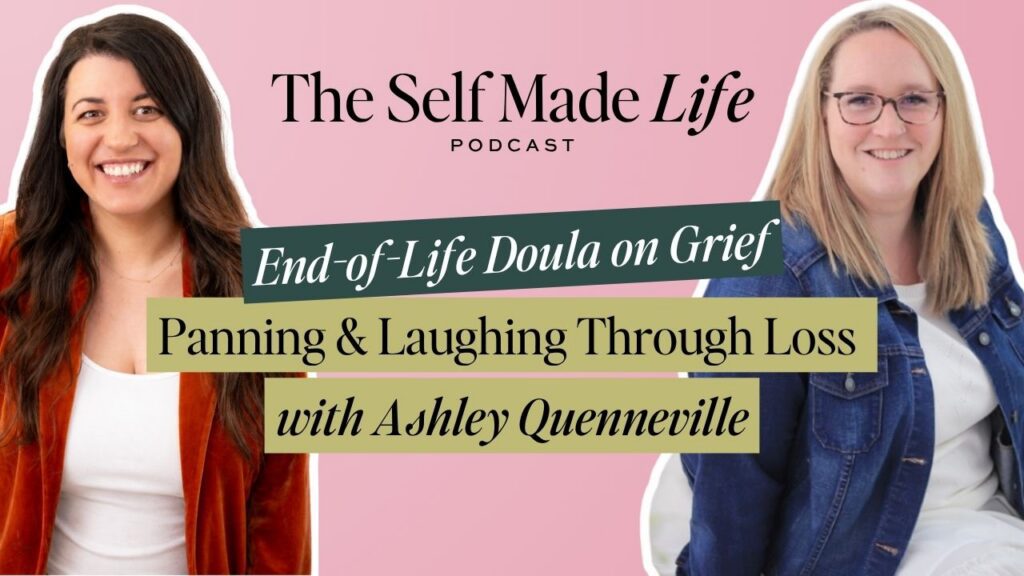
TL;DR: Ashley Quenneville is an end-of-life doula, certified grief coach, and founder of Tranquil Waters. In this episode, she explains what an end-of-life doula does, why a death plan works like a birth plan, and why grief shows up far beyond death. She also shares her own story of infertility, loss, and postpartum depression. Her biggest lesson: time doesn’t heal, but it helps you process and learn to live with your new life.
Content note: this post discusses death, infertility, and postpartum mental health.
When I first met Ashley Quenneville, she told me she’s an end-of-life doula. My honest reaction? “You do what?”
Ashley is a certified grief coach, end-of-life doula, and the founder of Tranquil Waters. She talks about grief with dark humour and zero BS. And she built her whole business around telling the truth about it.
This is a different kind of episode for The Self Made Life Podcast. It’s also one I think every listener needs.
How Ashley Became an End-of-Life Doula
For eight years, Ashley and her husband tried to have their first child. Over five of those years, they lost seven people. Then her grandmother passed away in hospice.
Her grandmother was her best friend. They talked on the phone every day. Ashley was there for every step of her passing.
What surprised her was how peaceful it was. Until then, every death she’d experienced had been traumatic. This one was calm, and even beautiful.
That changed how she saw death. She realized a good death often comes down to one thing: a plan.
What Does an End-of-Life Doula Do?
An end-of-life doula supports people before, during, and after a death. The support isn’t only for the person who is dying. It’s often for the family too, and sometimes it’s only for the family.
That support can happen at home, in hospice, or in a hospital. Ashley helps people figure out what they want and makes sure their wishes are followed.
She also works as a grief coach, virtually and in person. One family asked her to explain death to their children as their grandmother was passing. She shared enough to answer their questions, in an age-appropriate way, without overwhelming them.
Why an End-of-Life Doula Compares a Death Plan to a Birth Plan
Ashley keeps coming back to birth. We plan for it constantly. Epidural or no epidural? Who’s in the room?
She recently asked her 94-year-old grandfather the same kind of questions. He told her he’d just close his eyes and die. She gently pointed out it doesn’t always work like that.
So they talked it through. He wants to go to hospice, where her grandmother went. Then they covered the details: music, a beer, who should be there, and who shouldn’t.
Does it always go to plan? No. But when the plan is settled, families don’t spend the last moments arguing about what Dad would want. They get to tell him what he meant to them instead.
Grief Is Bigger Than Death
Everyone grieves at some point. And a lot of that grief has nothing to do with death.
Ashley supports people through divorce, job loss, the end of a friendship, and losing a child through custody. Halfway through our conversation, I realized I’d been grieving something myself. I only took a three-week maternity leave, and I’d never named that as a loss.
Ashley is also clear that the “stages of grief” don’t go in order. You might move through one stage, then land right back in it months later because something triggers you.
That’s why she doesn’t push anyone to move on. You never get over a death or a divorce. You learn to live with it and let it become part of who you are.
Why Dark Humour Belongs in Grief
In Ashley’s family, you didn’t talk about death. If someone was sick, nobody said much.
She believes that stuffing those feelings down only makes things harder later. A close friend of hers, who was like a dad to her, lived with colon cancer for ten years. His attitude was blunt: he was going to die anyway, so why not live?
Laughter takes weight off people’s shoulders. Dark humour isn’t for everyone, and Ashley says so. But she’s seen a room full of grieving people burst out laughing and then start crying together. To her, that’s relief. That’s grieving together.
“Laughing is medicine in its own way.” — Ashley Quenneville
Postpartum Depression and the Grief of Motherhood
Ashley went through three rounds of IVF, 16 rounds of IUI, and an egg donor. She and her husband had made peace with being the best aunt and uncle ever. Then, after a cancer scare, she got pregnant.
Her pregnancy was hard. She was sick constantly and ended up in hospital when her daughter tried to arrive at 18 weeks. After the birth, her postpartum depression was severe. She didn’t know what she was going through. She thought it was normal.
I shared my own experience with postpartum depression too. We talked about matrescence, the physical, psychological, and emotional shift of becoming a mother. It’s as big as adolescence, and hardly anyone talks about it.
Ashley’s message is simple. None of this should be taboo. We’re all going to grieve, so let’s start talking about it.
If you’re struggling: in Canada, call or text 9-8-8. For perinatal mental health support, reach Postpartum Support International at 1-800-944-4773.
What Ashley Wishes Someone Had Told Her
Her answer was one word: time.
When you’re in the middle of loss, you’re not processing. You’re getting through it. Ashley expects it may take her ten years or more to process the ten years her friend spent fighting cancer.
She also doesn’t love the word “heal.” Time doesn’t erase anything. It lets you process and learn to live with what your new life looks like.
Where to Find Ashley Quenneville
Ashley runs Navigating the Waves, an 8-week virtual grief support group. She also offers one-on-one grief coaching and end-of-life doula support.
Follow her on Instagram at @tranquilwaterstransition or email tranquilwaterstransitions@gmail.com.
Building a Business Around Your Own Story
Here’s what I kept thinking about after we hung up. Ashley took the hardest years of her life and built a business with a voice nobody else in her space has. She’s honest, she’s funny, and she’s clear about who she serves.
That’s what a strong brand does. It tells the truth about who you are and who you’re for.
If your brand still doesn’t sound like you, let’s talk about your brand strategy. You can also book a discovery call or say hi on Instagram at @monarchdesignco.
FAQ
What does an end-of-life doula do? An end-of-life doula supports the dying person and their family before, during, and after a death. That includes planning wishes, being present in the final days, and helping loved ones afterward.
Is an end-of-life doula the same as a grief counsellor? No. Ashley is a grief coach and end-of-life doula, not a counsellor. She offers a less structured, person-led approach alongside other forms of support.
What is a death plan? A death plan works like a birth plan. It records how someone wants their final days to go, including where they want to be, who should be there, and what brings them comfort.
Can you grieve something other than a death? Yes. Divorce, job loss, friendships ending, custody changes, and identity shifts like motherhood can all bring grief.
Is it okay to laugh while grieving? Yes. Ashley sees laughter and dark humour as a real way to cope and to grieve together.


